Miss En Scene is a French term meaning "In the scene of frame"
There are five elements of miss en scene, this includes;
1. Settings and Props.
This is where the film is set, for example,
2. Costume, hair and make up.
3. Facial expressions and body language.
4. Lighting and color
5. Positioning of characters and objects in the frame.
The setting is where media takes place, this includes what is around the place and where exactly they are. Props are objects that we see in the setting, e.g a spaceship from a Sci-Fi film.
Costume hair and makeup are what the characters wear and do to themselves, these are very important as it defines the character and makes them who they are.
We all communicate through facial expressions and body language, which is particularly important in media texts with the close up and extreme close up.
Positioning of characters and objects within a frame is very important because if the characters are in a wide open space but the characters are all squashed together it would look odd and the audience would not know where to concentrate. The audience will also be wondering what is happening with the rest of the space. However this can be used in certain examples where the director wants the audience to concentrate on two places at once, or where the audience can choose where to concentrate, this is called deep focus. It enables the audience to choose where to look whether it be foreground, middle ground or back ground.
E.g The best years of our lives. http://ffilms.org/the-best-years-of-our-lives-1946/
Objects and characters can be in the foreground, middle ground or background. This can emphasize the relative importance of the object or character.
Focus Pulling
Focus pulling is also a technique used where the foreground /middle ground or background is pulled into focus and the foreground/ middle ground or background is pulled out of focus.
Tuesday, 27 January 2015

Colour
The first use of color was in films such as Voyage a Travers L'impossible(An impossible voyage) by the Pioneer George Melies in 1904.

Here, the film was hand painted frame by frame. http://moria.co.nz/sciencefiction/an-impossible-voyage-1904-le-voyage-a-travers-limpossible.htm

The next development was the wax museum in
1933. http://www.imdb.com/title/tt0024368/

The first full three strip Technicolor was Becky Sharp in 1955. https://www.youtube.com/watch?v=a-P_Ira6kgE
From the 1930s to the 1940s black and white represented reality and color represented fantasy and mystery. However, today it is the opposite.
Denotation and Connotation
Denotation is the literal description of an idea, concept or object.
Connotation is what we associate with a particular idea, concept or object. Color works on the subconscious mind to create mood.
For example, we associate color with different concepts. e.g when we see the color red we think of love, romance, danger, anger, stop, blood or hot. However when we see blue we think of cold, distance, cold love, cold heart, the sky or water.
- 'We Need To Talk About Kevin' trailer. In this film they use a lot of red which suggest the danger and fear.
https://www.youtube.com/watch?v=YEfyfcEdW4Y- 'Eyes Wide Shut' trailer.
Unlike 'We need to talk about Kevin' this film uses a lot of blue shades and tones which suggests the distance and coldness in the relationship, and this is what the director wants to convey to the audience.
Here we can see examples of how color is used in different situations to portray different meanings to the audience.
Here, the film was hand painted frame by frame. http://moria.co.nz/sciencefiction/an-impossible-voyage-1904-le-voyage-a-travers-limpossible.htm
The next development was the wax museum in
1933. http://www.imdb.com/title/tt0024368/
The first full three strip Technicolor was Becky Sharp in 1955. https://www.youtube.com/watch?v=a-P_Ira6kgE
From the 1930s to the 1940s black and white represented reality and color represented fantasy and mystery. However, today it is the opposite.
Denotation and Connotation
Denotation is the literal description of an idea, concept or object.
Connotation is what we associate with a particular idea, concept or object. Color works on the subconscious mind to create mood.
For example, we associate color with different concepts. e.g when we see the color red we think of love, romance, danger, anger, stop, blood or hot. However when we see blue we think of cold, distance, cold love, cold heart, the sky or water.
- 'We Need To Talk About Kevin' trailer. In this film they use a lot of red which suggest the danger and fear.
https://www.youtube.com/watch?v=YEfyfcEdW4Y- 'Eyes Wide Shut' trailer.
Unlike 'We need to talk about Kevin' this film uses a lot of blue shades and tones which suggests the distance and coldness in the relationship, and this is what the director wants to convey to the audience.
Here we can see examples of how color is used in different situations to portray different meanings to the audience.
Tuesday, 20 January 2015
Zodiac Opening Sequence
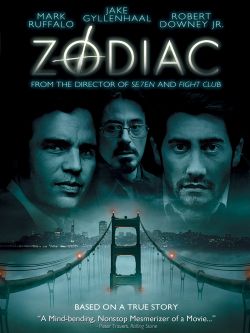 Zodiac is a 2007 American mystery thriller film directed by David Fincher, starring Jake Gyllenhaal, Mark Ruffalo, Robert Downey Jr, Anthony Edwards, Brian Cox, Elias Koteas, Donal Logue, John Carroll Lynch and Dermot Mulroney. It is based on a true story about a notorious serial killer who called himself the "Zodiac" who killed around the San Francisco Bay Area.
 https://www.youtube.com/watch?v=Ub6wGZu5Xng 0:00- 5:00
Sound
The opening scene starts off with calm romantic music and fireworks to make the audience feel settled and relaxed. The sound is non-diegetic therefore the characters cannot hear or see the source of the sound. We hear dialogue between the two characters that we meet, which are a boy and a girl. As they continue on they are now alone in the middle of no where conversating, we suddenly hear cars behind them who shoot our fireworks, however we do not hear any dialogue from who ever was in the other car. As the unknown character walks up behind the car and shines his light, the boy in the car says "you really scared us" which creates recognition as it conveys that the two characters know each other. Therefore the audience are now on edge wanting to know who the unknown character is. As the unknown character fires his gun shots we hear rock music which does not match the actions happening.
Miss en Scene
The scene starts off dark which creates mystery. It has a romantic feel as we can see fireworks and a people playing with sparklers, the scenery is romantic and relaxing to create a peaceful mood for the audience, which makes them unprepared for what will happen next. As the boy and the girl are still together in the car the scenery is still dark and doomy which may suggest that something bad is going to happen. As they continue driving the tension gets bigger as they are in pitch black and in the middle of no where. We then see a car pull up behind them and turn their car light off, which creates tension as we do not know who is in the car or what they want. Additionally, the fact that it is pitch black and we can only see the two characters creates suspicion and builds up the tension which leaves the audience in suspense. The car drives off and comes back again, however this time they leave their lights on and shine a torch light at the two characters.
Editing
The editing starts off slow with no cuts until we meet our first character who is a boy who gets into the car which a girl is driving. The cuts are starting to pick up pace which creates tension for the audience/viewer.
Camera
The scene opens with a medium shot and then into a tracking shot as we follow the car driving along from the characters POV. As we meet our first character we then get a shot reverse shot during their conversation. As they are in the middle of no-where we get a close up of the characters face as they look worried and anxious, which also make the characters feel anxious, as we can tell that they are in trouble.
Brick- Opening Scene

Brick is a 2005 American neo-noir thriller film written and directed by Rian Johnson, starring Joesph Gordon-Levitt. It was Johnson's directorial debut and won the Special Jury Prize for Originality of Vision at the 2005 Sundance Film Festival. Brick was distributed by Focus Features, opening in New York and Los Angeles on April 7th 2006.
The film's narrative centers on a hardboiled detective story that takes place in a Californian suburb. Most of the main characters are high school students.
Sound
As we enter the opening of Brick, we hear calm, mellow music which is of what you may hear a hippie play or something you would hear when someone is depressed during a film. The music is non diegetic as the characters are unable to hear the music. The music makes the audience feel sorrowful and assume that something bad has happened or is going to happen.
Miss en Scene
The scene starts off pitch black and then we get a close up of a man crouching down with his hands together touching his chin, seeming to be reminiscing about something. His body language tells us that he is upset about something or may be regretting something that he has done, and is now thinking about what to do to clear the situation. We then get an extreme close up of his face which suggests that we should take a good look at this character and remember his face, as he is important in the film. At the start of the scene the lighting is very dull which creates an unexciting and lifeless mood to the audience. We then get a master shot of the boy still crouching, however we can now see a body opposite him laying face down, which the audience assume is dead or unconscious, because of the man;s posture and facial expressions, the audience are forced to believe this character had done this to the person laying face down.
The scene starts off pitch black and then we get a close up of a man crouching down with his hands together touching his chin, seeming to be reminiscing about something. His body language tells us that he is upset about something or may be regretting something that he has done, and is now thinking about what to do to clear the situation. We then get an extreme close up of his face which suggests that we should take a good look at this character and remember his face, as he is important in the film. At the start of the scene the lighting is very dull which creates an unexciting and lifeless mood to the audience. We then get a master shot of the boy still crouching, however we can now see a body opposite him laying face down, which the audience assume is dead or unconscious, because of the man;s posture and facial expressions, the audience are forced to believe this character had done this to the person laying face down.
Editing
Subscribe to:
Posts (Atom)